is it worth getting mortgage protection insurance

what insurance pays off your house if you die

Let's say you own a mortgage of $250,000. The mortgage protection policy typically offers you $250,000 in term life insurance over the loan. If you pass away, the family members can take care of the debt and remain in the house. Sometimes, they're designed so that the policy will decrease in value as time passes (as you pay off the mortgage).

It would help if any representative didn't pressure you. Be patient when looking at the various alternatives. We're here to aid you with this. So, don't hesitate to contact us for a complimentary consultation or to request a custom quote.

The "Return of Premium" (ROP) rider will refund the amount of premium you have paid (excluding all claims) after the period (usually between 20 and 30 years). Understanding the fine print of the ROP rider is crucial as the information can differ significantly.

how do you know if you have mortgage protection insurance

If you just took out a mortgage, we'd advise you to look at term life insurance that would factor in your mortgage and income replacement to help care for those you'd leave behind. The typical recommendation is to have 8-10 times your income in a 20 or 30-year life insurance policy.

Does this sound like a great idea, or is it a hoax?

how do you know if you have mortgage protection insurance
what does mortgage protection cover

what does mortgage protection cover

The mortgage life insurance policy is specifically designed to make your mortgage payment upon loss of income or disabled. The procedure typically has the benefit of decreasing (face) value that is reduced proportionally to the declining value on your mortgage. The policy owner can name your spouse or a third party as the beneficiary so that they can pay off your loan in one single amount. Or, the beneficiary may retain the death benefit and continue to make monthly mortgage payments.

mortgage protection insurance scams

Let's say you have a $250,000 mortgage. These mortgage protection policies will usually give you $250,000 in term life insurance for the life of the mortgage. If you die, your family can pay off the loan and stay in the home. Sometimes they're structured so that the policy decreases in value over time (as you pay the mortgage).

does life insurance help with getting a mortgage

Mortgage Life Insurance is an innovative way to provide life insurance. Some might say it's an over-the-top method, and in many cases, they're correct. However, as stated earlier, many agents utilize this marketing strategy to attract prospective homeowners. They are aware of the requirement for additional life insurance coverage.

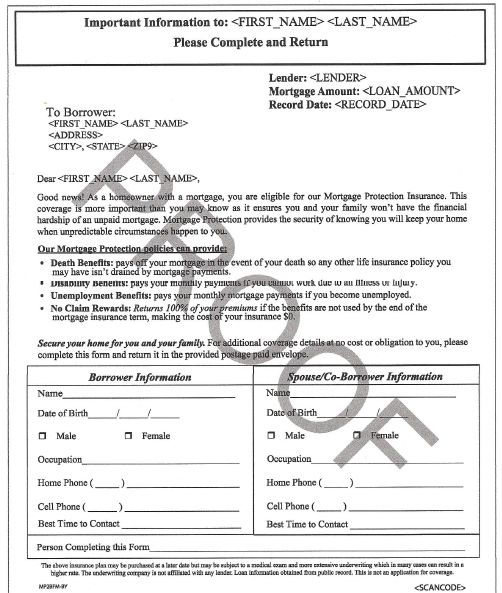
If you just recently purchased a home or refinanced your mortgage, you will likely receive many offers in the mail for "Mortgage Life Protection" or "Mortgage Life Insurance." In this article, we will take a look at the pros and cons of Mortgage Protection Insurance. You can answer the question: Is Mortgage Protection Life Insurance a scam or a smart move?

is mortgage protection worth it

Be wary of offers asking for personal information such as Social Security, bank account, or credit card numbers. Most trustworthy companies will not solicit these details when first contacting them to find out if they would like to purchase mortgage insurance to protect you from the mortgage.

is it worth getting mortgage protection insurance
is mortgage protection worth it

Frequently Asked Questions


Is mortgage protection insurance required? Mortgage protection insurance isn't needed. It isn't the same as private mortgage insurance, which many banks or lenders will require you to buy.


A mortgage protection life insurance policy is a term life policy explicitly designed to repay mortgage debts and associated costs in the event of the borrower's death. These policies differ from traditional life insurance policies. With a conventional policy, the death benefit is paid out when the borrower dies.


Once you pay off your mortgage, you will no longer have a lender requiring you to have homeowners insurance. While you aren't federally required to have it, keeping your coverage is essential since it protects you financially if your home incurs significant damage or someone is injured on your property.